
 310-490-7343
  info@amaxxagroup.com
 Somewhere in your files sits a plan you wrote eighteen months ago. Open it and read it cold. Some portion of it, maybe a…

Path Setting
09 Jun 2026
|Post by David Zimmerman, MSc, CPC
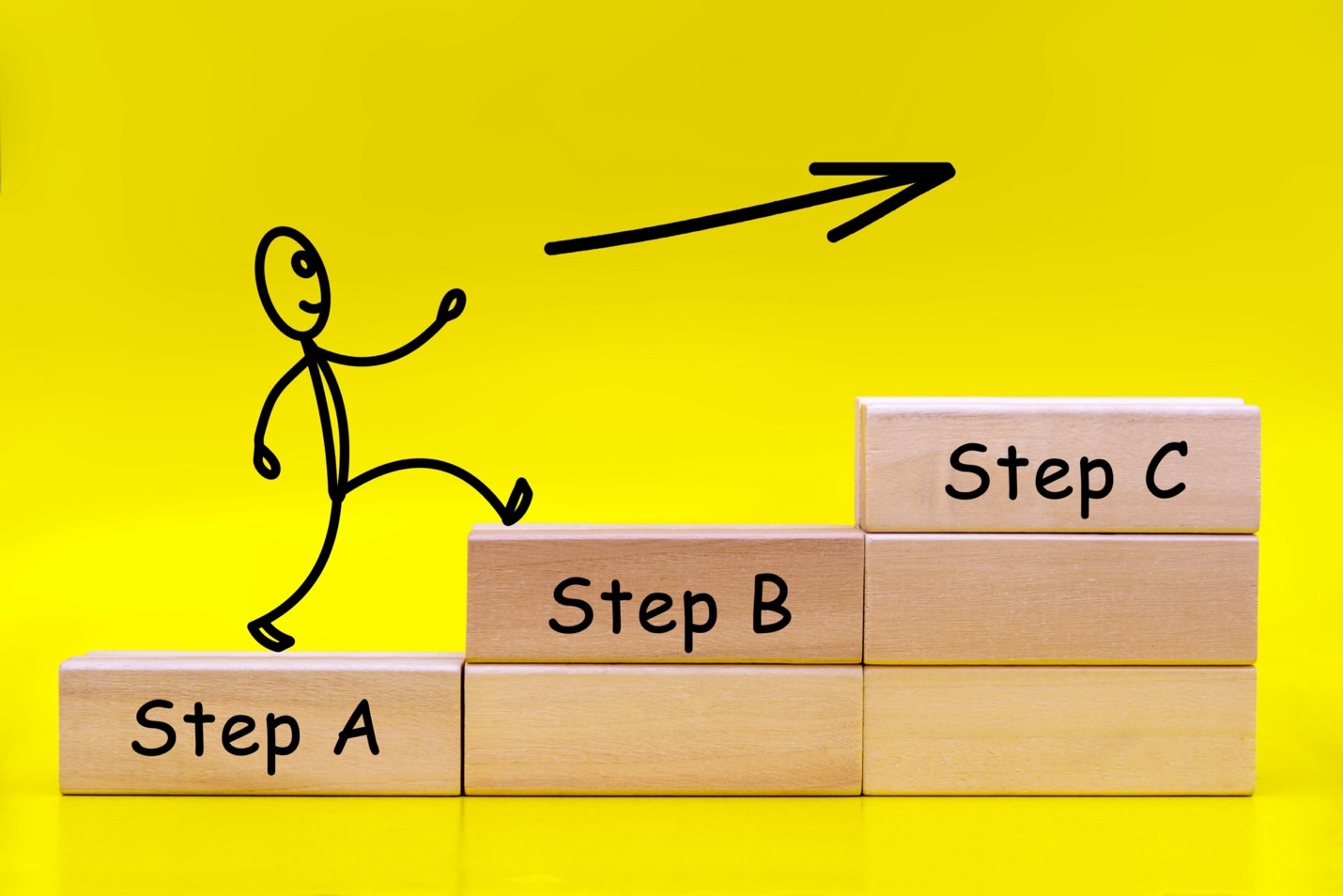
Somewhere in your files sits a plan you wrote eighteen months ago. Open it and read it cold. Some portion of it, maybe a quarter, maybe more, describes a market, a role, or a version of you that no longer exists. The plan didn’t fail; the world it was written for left.
And the gap keeps widening. Strategy cycles that used to hold for three years now wobble inside one. AI is rewriting job descriptions faster than companies can post them. The half-life of a goal is collapsing, while most of our planning habits were built for a world where destinations stayed put.
Goal setting still works the way it always has: pick a point on the horizon, reverse-engineer the steps, execute. The discipline is sound. The assumption underneath it is what’s eroding: that the point on the horizon will still be worth reaching by the time you arrive.
Path setting starts from a different premise. You anchor to a direction instead of a coordinate, and you put your attention on the quality of the movement: what you’re learning, how you’re adapting, who you’re becoming along the way. The endpoint stays in view, held loosely, because the path keeps revealing endpoints the original plan couldn’t see.
Why this matters more every year
When the landscape moves, a fixed goal turns from compass into anchor. Teams keep executing against targets that stopped mattering because the targets were written down and the writing made them feel permanent. Path setting builds the pivot into the operating system. Re-routing isn’t failure recovery; it’s the expected behavior of someone paying attention.
There’s a compounding effect, too. When progress is measured by capability rather than checkbox, every detour pays. The project that got cancelled still taught you the skill. The market that closed still sharpened your read on the next one. People who walk this way arrive at five years out with a range their goal-locked peers can’t match, and they rarely predicted the destination they reached.
The part nobody says out loud
Here’s where it gets uncomfortable. A distant goal can be a hiding place. As long as the achievement sits safely in the future, you get to postpone becoming the person who would have to do the work. The goal absorbs your ambition and the calendar absorbs the blame: I’ll get serious next quarter. A path offers no such shelter. The only question a path asks is what you did today, and today keeps showing up.
Goals also let you outsource your identity to an outcome. Hit the number and you’re a success until the next number. Miss it and the miss reads like a verdict. Path setting relocates identity to the practice: you are what you do repeatedly while moving, not what the scoreboard said at the end of last quarter. That trade costs you the dopamine of the finish line. It pays you back in resilience the finish line never could.
Working the path
This is a practice, and practices have moves:
- Start with a direction. A vision broad enough to survive contact with reality and specific enough to rule things out. “Become the advisor clients call first when the rules change” gives you steering. “Grow AUM 20% by December” gives you a deadline.
- Mark progress in capabilities. What can you do now that you couldn’t six months ago? That answer survives a market downturn. A revenue target doesn’t.
- Let detours count. Some of the most valuable territory you’ll ever cover shows up off-plan. Treat the unplanned route as data, and mine it before you judge it.
- Review the walking. On a regular cadence, ask what you learned, what shifted, and what the direction looks like from where you now stand. Movement without that review is just mileage.
None of this requires a calendar event. You don’t need a January, a fiscal-year kickoff, or a milestone birthday to begin. You need a direction worth walking and the honesty to check, at intervals, whether the walking is changing you. If it isn’t, the problem isn’t your effort. It’s your path. Change it.
Recent Blogs

07 Oct 2025
|Post by David Zimmerman, MSc, CPC
Empathy, Empathy, Empathy: As A Leader, When Is Enough…Enough?
Empathy is a strength. It builds trust, reduces fear, and helps people do their best work. But overdone, it can backfire. When leaders shield…

22 Jul 2025
|Post by David Zimmerman, MSc, CPC
Adaptation Now Beats Optimization
Do the old rules of business even work anymore? Every day, new technologies, markets, and trends rewrite what it means to win and lose.…